



How Orchids Think: Becom(e)ing Orchids蘭花如何思考:成為蘭
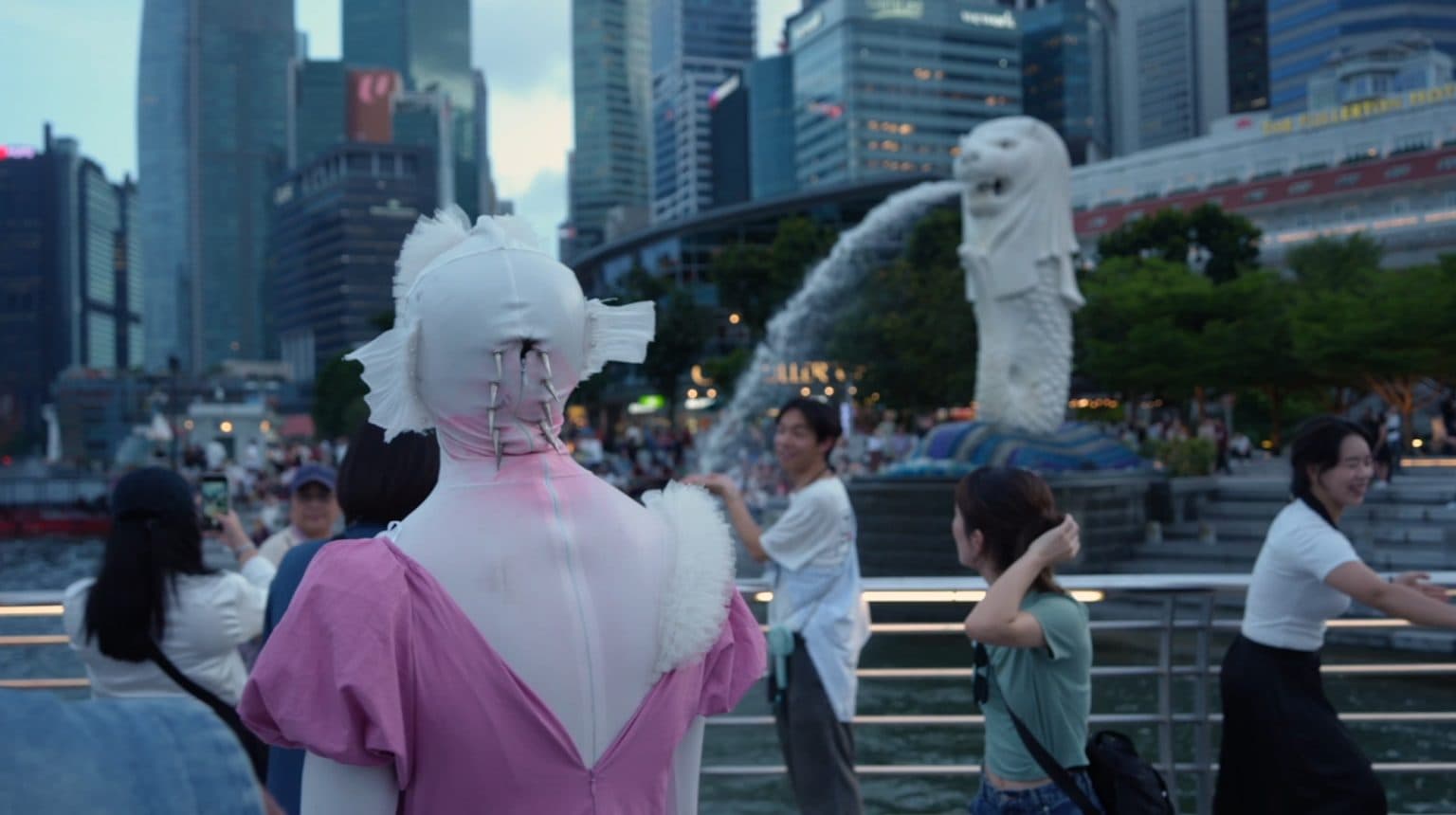
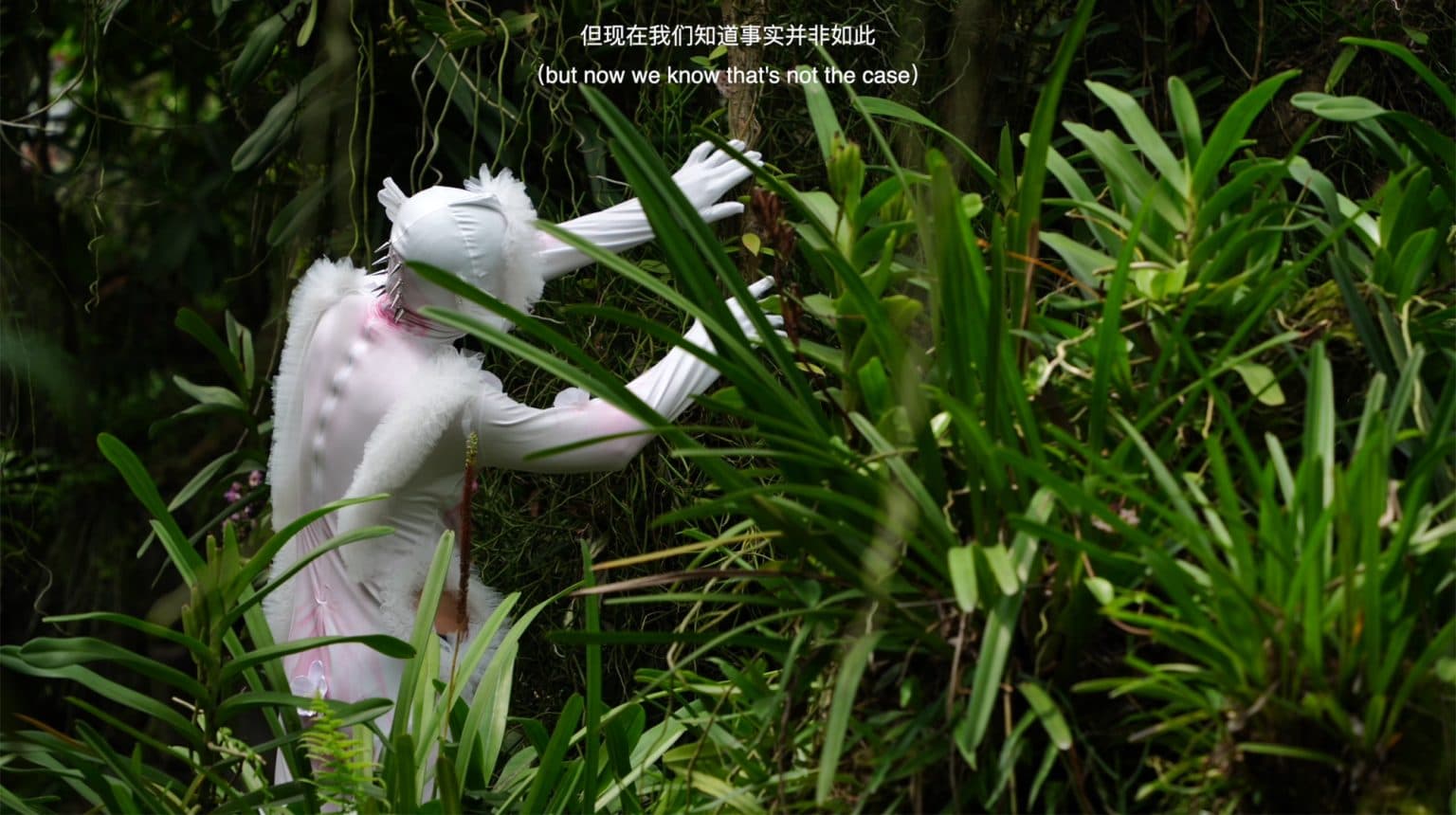
How Orchids Think: Becoming Orchid is an experimental documentary that steps away from established narratives of orchids and reconsiders how my ways of sensing and understanding are formed through encounters with them. The film brings together moving image, bodily performance, and text, not to produce knowledge about orchids, but to approach them as companions in thinking, as a form of life that continually reshapes how I look, move, and experience the world.
In the film, “becoming orchid” is neither imitation nor simple symbolism. It unfolds as a process that takes shape through walking, pausing, and bodily response. I move among orchids while remaining open to a state in between the human and the nonhuman, allowing thought to emerge not only through language, but through the interactions of body, objects, and environments.
The work begins from Natasha Myers’s rereading of Charles Darwin’s description of the “theatre of orchid revelation,” returning to the historical conditions through which orchids were once seen and understood. In nineteenth century Europe, orchids were often imagined as performers, carefully arranging encounters with others through scent, form, and timing. At the same time, this fascination was inseparable from histories of collecting, classification, and transplantation. Through naming and relocation, orchids became part of systems that sought to render nature visible and controllable.
Rather than tracing a single historical narrative, the film places orchids from different contexts alongside one another. These include orchid stamps displayed on walls, ink orchids and hand gestures from Chinese cultural traditions, and orchid figures found in laboratories and public spaces. They appear in proximity without being unified into a single meaning.
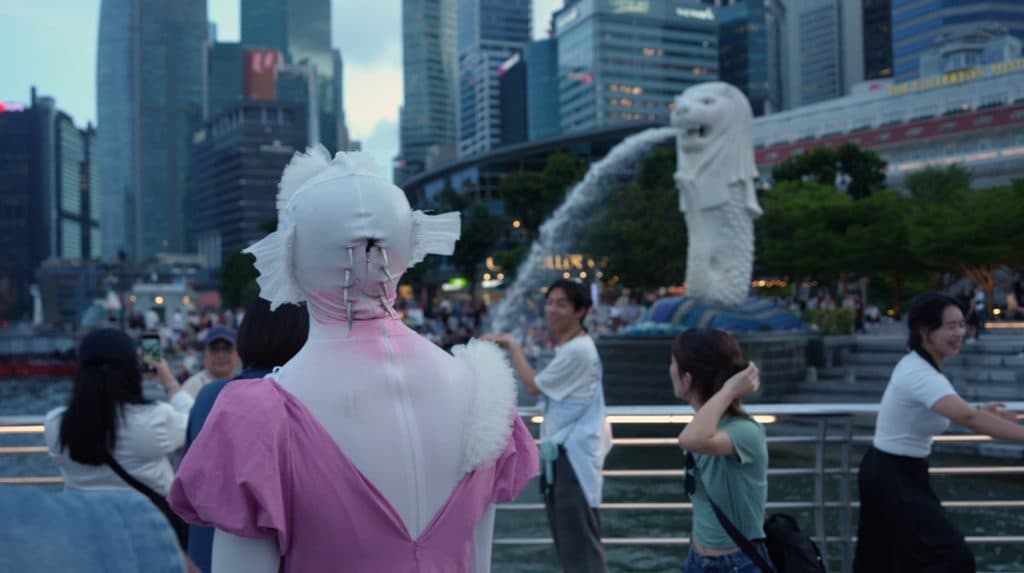
Filming unfolds through walking in Shenzhen, Hong Kong, Singapore, and Suzhou. Walking is not a means of reaching a destination, but a way of seeing and encountering. Research takes place through the body, through slowing down, detouring, and chance meetings with cultivated plants, fragile urban ecologies, and orchid symbols that have gradually lost their voice in the present.
Orchids engage with the world through resemblance, scent, and disguise. They sustain delicate forms of symbiosis through attraction rather than domination. This led me to consider whether becoming orchid might offer another way of understanding relations between the human and the nonhuman. Through gesture, costume, and performance, my body becomes a site for thinking with orchids. This is not an attempt to become a plant, but to remain in an in between state where identity loosens and attention shifts toward relation itself.
In the final section, The Orchid Manifesto, the film extends an uncertain invitation to viewers. It asks them to try becoming orchid, to sense and move at a different pace. The work does not offer answers, but keeps becoming open as an ongoing process.
《蘭花如何思考:成為蘭》是一部實驗性紀錄片,嘗試離開既有的蘭花敘述,重新思考我如何在與蘭花的相遇之中逐漸形成感知與理解。影片結合影像、身體表演與文字書寫,不是為了建立一套關於蘭花的知識,而是將蘭花視為一種同行的存在,一種會不斷改變我觀看、移動與感受世界方式的生命關係。「成為蘭」不是模仿,也不只是象徵。它更像是一個在行走、停下來、身體作出回應的瞬間慢慢展開的過程。我在蘭花之間移動,也讓自己停留在一種介於人與非人之間的開放狀態,使思考不只發生在語言之中,而是透過身體、物件與環境一點一點生成。
作品從 Natasha Myers 對達爾文「蘭花揭示劇場」的重新閱讀出發,回到蘭花曾被如何觀看、如何被理解的歷史情境。在十九世紀的歐洲,蘭花常被想像為表演者,透過氣味、形態與時間的安排,精心建構與他者相遇的場景。但這種迷戀同時也與採集、分類與移植的歷史糾纏在一起。蘭花在被命名與遷移的過程中,逐漸進入一套試圖讓自然變得可見、可控的系統之中。影片並不試圖梳理一條清晰的歷史線索,而是將不同語境中的蘭花並置在一起,它們彼此靠近,卻沒有被統一成一種意義。
行走在深圳、香港、新加坡與蘇州之間,不是為了抵達某個目的地,而是一種觀看與遭遇的方式。研究透過身體發生,在放慢、繞行與偶然的相遇之中,面對被栽培的植物、城市邊緣的生態,以及那些在當代逐漸失聲的蘭花符號。蘭花與世界互動,往往依靠相似、氣味與偽裝,透過吸引而非支配,維持脆弱的共生關係。這讓我開始思考,becoming orchid 是否可能成為一種重新理解人與非人關係的方式。透過姿態、服裝與表演,我的身體成為一個與蘭共同思考的場域,不是變成植物,而是暫時停留在中間,讓身份鬆動,讓注意力轉向關係本身。在最後的〈蘭花宣言〉中,影片向觀者發出一個並不確定的邀請,嘗試成為蘭,換一種節奏去感知與移動。作品不想給出答案,而是將「成為」留在持續發生之中。
videotage programme history /
about the artist /

I am a research-driven visual artist and cultural practitioner based in Guangzhou, China. My practice combines moving image, writing, and sculptural approaches to explore how identity, intimacy, and cultural values are continuously shaped and reconfigured within specific social and historical contexts.
Since 2020, orchids have become a central methodological and conceptual focus in my work. At the core is becoming orchid, an ongoing, practice-driven inquiry into fluid identities, queer ecology, and alternative forms of kinship and coexistence. Drawing on writing, observation, and speculative practices, this research investigates how subjectivity and relationality can be generatively reimagined beyond normative social and biological frameworks.
Orchid Pavilion (蘭亭無序), a long-term project initiated by me, serves as a situated research field informing becoming orchid. Rooted in contemporary China, it combines artistic research, cultural and conceptual translation, and community-based learning, providing a generative context from which specific conceptual threads are abstracted and further developed.
Recent research engages the Chinese ink orchid as a lens to revisit the aesthetics of the junzi (君子), the noble or exemplary “Gentleman” in Confucian thought, historically celebrated among male literati, and its gendered implications. This exploration extends my broader inquiry into how cultural ideals are embodied, naturalized, and contested, offering a generative reflection on identity, ethics, and relationality.
vmac archived / artworks from the artist
All copyright reserved by the artist. 作品版權歸藝術家所有。
For enquires, please contact [email protected]