

December 2025
VMAC Article
The Vernacular: Homelands, Soil, Wind and Realms
Text: Winsome Wong Dumalagan
During a 2025 Arkipel panel discussion, “Vernacular Language in Global Geopolitics”, Papuan songs—described as vernacular literature—were linked to vernacular architecture. The term “vernacular” has stayed with me since. Vernacular architecture is often defined as a type of building design that responds to local needs and materials, grounded in community knowledge rather than formal institutional training. In Chinese, it is written as 「鄉土建築」—“鄉” (homeland, countryside) and “土” (earth, land)—or as 「風土建築」, emphasising “wind” and “earth”, the climate and material conditions of a place. The latter translation foregrounds elemental forces rather than institutional categories and locations.
Tracing the origin of the word further leads us to the Latin verna—a slave born in the master’s house—suggesting informality, marginality, and distance from authority. Whether understood as “homeland”, “soil”, or “custom”, the vernacular emerges from organic, lived contexts: languages, dialects, songs, architectures, and stories formed outside official unifying systems—be they colonial administrations or modern nation-states. These vernacular forms carried their own worldviews, emotions, and logics before they were absorbed (swallowed) or standardised (unified) by linguistic and political authorities, and before vernacular architectures were replaced by urban planning and standardised high-rises—structures often indifferent to wind, soil, species, or natural habitats. Languages and places that once sheltered us were gradually stripped of their contexts and lost their grounding.
When trying to understand the vernacular in today’s world of globalisation, industrialisation, and accelerated mobility, particularly through the lens of videos and films where they are inevitably products of technological advancement—and to many places, the products of foreign invention—could film or video language cultivate its own vernacular quality while remaining bound to modern media? How do we understand the idea of “homeland”? How do we communicate a sense of the “local” to audiences shaped by different cultural backgrounds? Where are the “wind” and “soil” that once formed our raw materials for building places in our “homelands”? What becomes of the “wind” and “soil” that once anchored our sense of “homeland” in contemporary society? As borders shift and people move, and with urban development blooming around the globe, the physical “homeland” could be faraway, demolished or even not existing. Will the idea of “鄉”—a local, native land—become less geographic and physical than mnemonic, conceptual, or imagined?
These questions were amplified at Arkipel. Filmmakers from Asia, Africa, the Middle East, Europe, and more—alongside Indonesian filmmakers from diverse cultural backgrounds—brought different notions of “localness” into dialogue, particularly the idea of the “local” in relation to the “world”. Exchanges with Indonesian friends, in particular, deepened my sense of the organic, fertile traditions being safeguarded, even as rapid global change presses on. Featuring an array of films and perspectives from different parts of the world, the festival became a space to rethink the “world” and the “local” through shifting lenses.
1st Anchor: Layers of the “Local”
My inquiry into media art in Indonesia begins with a preliminary review of relevant literature and video works related to the early stage media art development. When tracing the history of video art in Indonesia, one invariably encounters Krisna Murti (1957-2023), a pioneer who integrated video into installation practices while negotiating traditional culture with a sensibility that oscillates between humour, irony, and critique amid ongoing socio-economic change. As curator Asikin Hasan observes, [1] Krisna often laughed in agreement, and sometimes interrupted and disputed discussions on tradition, behaviour, and the paradoxes embedded in society; at times he mocked the seriousness of “the West”, while at others he expressed a sincere pride in “the East”. [2] Meanwhile, curator Jeong-ok Jeon remarks on Krisna’s belief that Indonesians tend to articulate meaning through facial and bodily gestures rather than direct verbal expression—without understanding such bodily vernacular, foreigners tend to misunderstand a local’s true intention. [3]
For me, as a visitor still learning the contours of Indonesia’s cultural and artistic landscape, these insights made for interesting anchors. It might take some time to be able to fully grasp the humour embedded in the works and to understand how locals themselves view their culture, especially given the diverse cultural and geopolitical backgrounds involved. There could always be a gap between a foreigner’s expectations of the “local” and the rich, fluid cultural contexts perceived from within—contexts continuously reshaped by global, social, political, and economic forces.
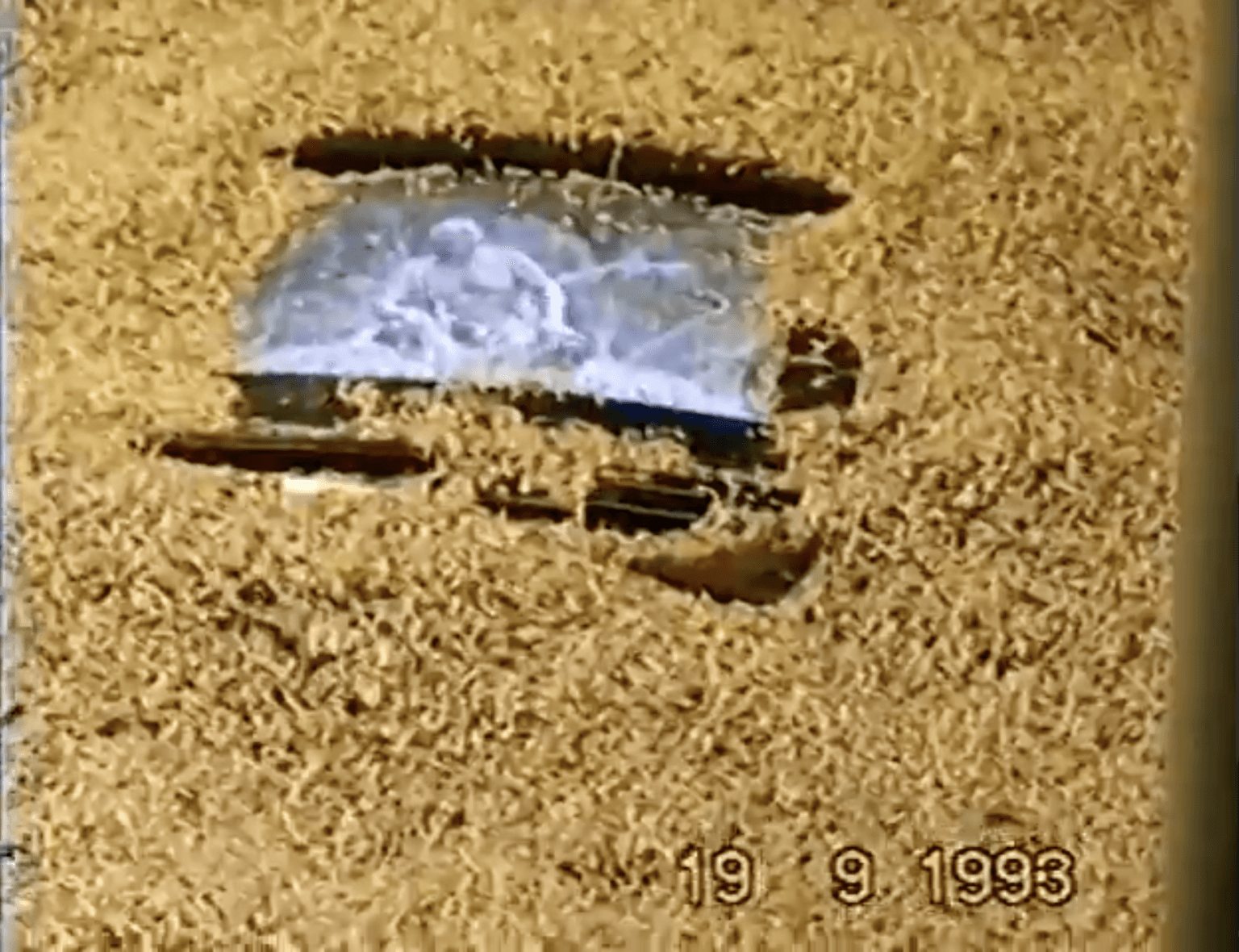
Krisna’s 12 Hours in the Life of Agung Rai, the Dancer (1993) offers an illustration. Beyond documenting a traditional dance, the work dwells on facial expressions, the dancer’s exposed belly, and gestures performed against the movement of the waves, producing layers of embodied nuance. Krisna himself, with a Balinese mother and Javanese father, born in Kupang and graduated from the Institut Teknologi Bandung (ITB), embodied Indonesia’s cultural multiplicity and the mobility within such a vast archipelagic state—an internal plurality echoed in the textures of his practice. Beginning with artists and filmmakers—whether internationally recognised or working locally—becomes a productive method for mapping the diverse perspectives through which the “local” is represented, questioned, and continually reimagined.
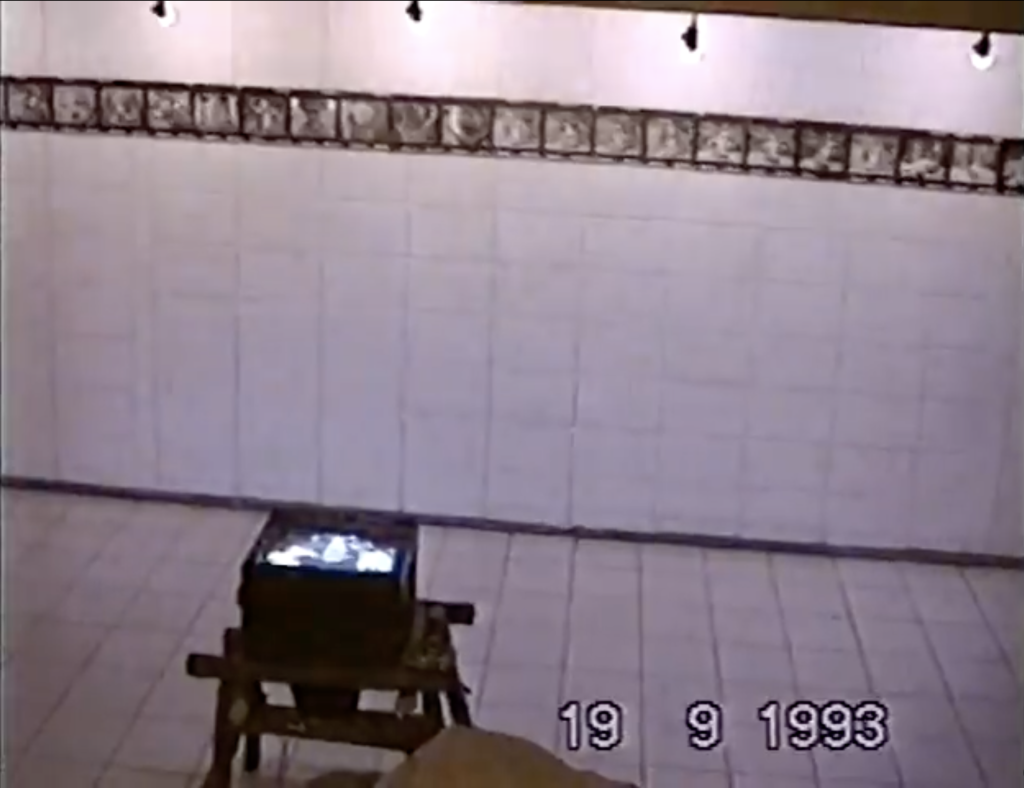
Thumbnail Photo and above: Krisna Murti’s 12 Hours in the Life of Agung Rai, the Dancer, Documentation in 1993, https://youtu.be/nJ96llODHkE?si=zVHW1hFJjcqzBRJq.
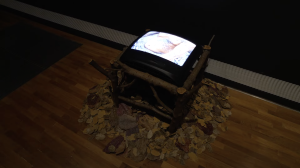
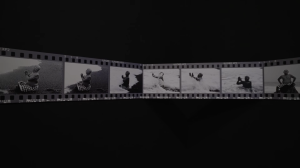
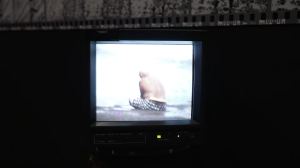
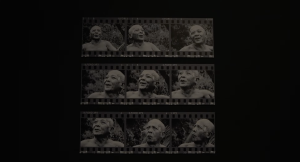
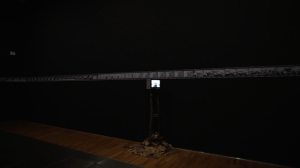
Krisna Murti’s 12 Hours in the Life of Agung Rai, the Dancer, Documentation in 2023, National Gallery Singapore, https://youtu.be/XHvilG5kMaY?si=Ge2Oy4Q-uArFFZ43.
2nd Anchor: The Vernacular and the Museum
During Arkipel, at the aforementioned panel discussion and a screening programme featuring his film, Papuan filmmaker Yonri Revolt shared extensively about the vernacular in his homeland, Papua, located at the easternmost province of Indonesia (around four to six hours by flight from Jakarta), where the Christian Church and missionaries once repressed Papuan culture since 1855 and the people lived through another wave of cultural repression under the “nationalisation” of Indonesia introducing “national culture”. In 1978, the collective named Mambesak – the Bird of Paradise was formed to preserve and promote Papuan culture, including the language, through Papuan folk songs. The group was dissolved after the leader, Arnold Ap, was killed by the military in 1984. Meanwhile, 110 languages were recorded across 255 indigenous communities through the effort of Mambesak in archiving Papuan folk songs and compiling them into albums. Beyond vocabulary, musical scales and tonal structures became markers of cultural identity.
In Tete, Nene, Permisi (Temple of Ancestors) (2025), a film by Yonri Revolt and Mahardika Yudha that was screened at Arkipel’s programme, the Loka Budaya Museum becomes an organic protagonist. With Arnold Ap, who founded Mambesak, as the first curator, the museum of Papuan history and artefacts became a container of the historical and cultural objects of the ethnic communities around Papua and a container of the visitors and staff of the museum. Personal memories, myths, and historical fragments are intermingled through the voices of staff members such as Enrico Kondologit and Soleman Soendemi. The museum becomes a living organism: stories accumulate around it without strict boundaries between fact, memory, and belief. In the film, the trajectory of the system of the organisation of the museum is discussed, unveiling different interpretations and personal memories of stories around the museum, some of which involve spiritual beliefs. The museum itself becomes an organic entity where these stories, memories and interpretations grow around it, sometimes indistinguishable (or perhaps not needing to be distinguishable) from historical facts, personal memories and myths. The film is woven from personal narratives of different stakeholders, including family histories and memories around the community, rather than grand historical and institutional narratives. The film is perhaps an effective illustration of the dynamic characteristics of the narratives of history, where the inclusion of personal and family histories contributes to maintaining the cultural identity of the community. As Enrico mentioned about the inevitable mixtures of descents among different ethnic communities along social development and the need for symbols to sustain cultural identities, this also points to further questions about the idea of “homeland”: in the face of urban and social political development, changes of political authorities, and increasing mobility of people, how are the stories about “homeland” being told and passed on? The development of the museum and the changing ways of categorisation and organisation also act as a demonstration of how local knowledge is built and intertwined with the times and storytelling.
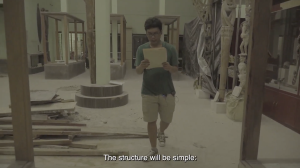
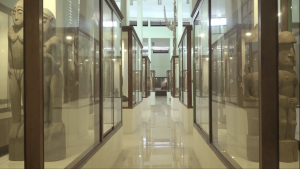
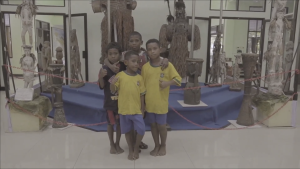
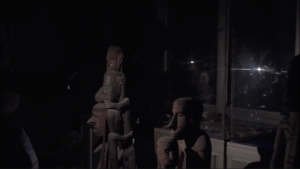
Shots from Tete, Nene, Permisi (Temple of Ancestors) (2025) by Yonri Revolt and Mahardika Yudh.
3rd Anchor: Tales and Myths
This intertwining of personal histories with storytelling also resonates with the opening film of Arkipel Festival 2025, Hadi the Hero (2024) by Iranian filmmaker Abbas Baluchi, prompting the audience to reflect on how one creates a personal system of remembering and imagining, particularly when far away from urban civilisation. The 85-year-old protagonist, Sadegh Rezao, created his own cosmology of paintings and sculptures around the alley and his home, some recording his own stories and family stories. Some of these stories are at times indistinguishable from myths and fables. In the final shot where Sadegh lies down in his own garden, instructing the director to conduct an aerial shot of the garden he has created, far away from other vegetations, he becomes the creator of memory, paradise, and the world, as if he was the god of this land, even if none of it would be eternal. This system of recording and storytelling is akin to building museums—sculptures and paintings could be turned into artefacts and symbols, awaiting other interpretations in the future, similar to how Hadi tells his own stories and histories.
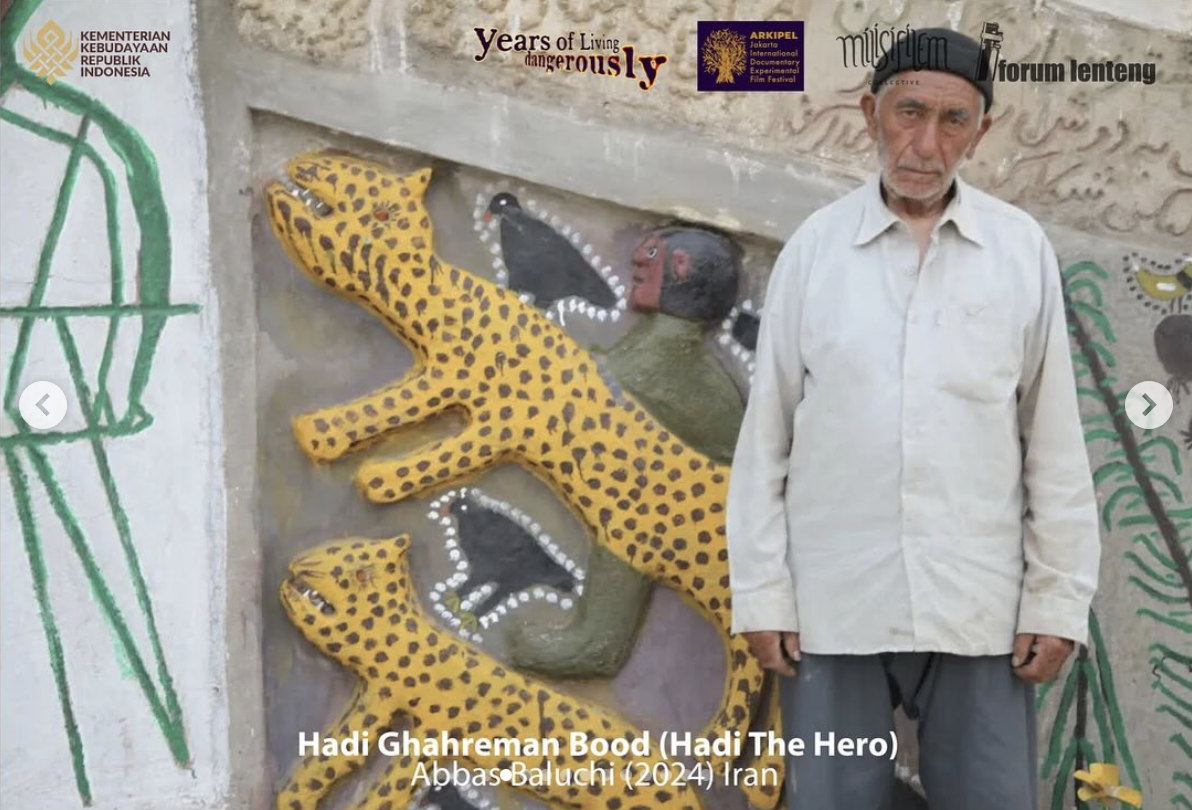
Promotional image of Hadi the Hero (2024) by Abbas Baluchi from Arkipel Festival.
The Vernacular as an Organic Process
The vernacular is perhaps the fluidity and organicness to what is around, who is coming in and out; it could be a constant act of building and construction, not the fixed narration by the institution or those in power. Like the reconstruction of the museum in Temple of Ancestors, with people coming in and out of the museum including kids playing barefoot, the recollections of the museum staff of how his parents made similar crafts as the artefacts displayed in the museum, the old man’s constant construction of his artworks in Hadi the Hero is an organic and dynamic container that interacts with the present and the past.
This organic process became even more pronounced in the Milisifilem Collective’s programme, [4] where participants learned about film and video and created their own works under the theme of One Hundred Years of Solitude by Gabriel García Márquez. Participants presented works shaped by their localities and interpretations of the book. Among them, Tiger Conversations by Beny Kristia gathers stories related to tigers, mostly from his peers. Some shared their impressions of tigers related to social media and tik-tok. One of them recalled his memories of seeing a tiger in his province called Solok, located in West Sumatra, where the people still practised hunting; he recounted how, on a hunting trip with his uncle when he was young, he saw the tiger stretch against a tree like a cat. The Indonesian friends liked the film for its humour. As a foreigner, it was not easy for me to follow the content and its context. I found it essential to ask the Indonesian friends for their insights so that I could pick up nuances that I would have missed as an outsider, even if I might still not be able to fully grasp them. Another film not screened during the festival but was shared by a collective member is a short film called Saya di Sini, Kau di Sana (A Tale of the Crocodile’s Twin) (2022) by Taufiqurrahman Kifu. In the film, tales related to crocodiles around Palu Bay during Indonesia’s colonial period are mentioned, leading the viewer to contemporary myths and tales, while also harkening back to older tales about crocodiles around the area. There are many shots in the film illustrating the current development of the area and how that has led to more frequent appearances of crocodiles.The tales of crocodiles have always appeared in different forms throughout history.
While the development of film and video has been inevitably shaped by influences from the West, including technological development, film and institutional development, and the usage of film and video in the contemporary art scene, could there be possibilities of the vernacular lying within film and video language beyond contents relating to the vernacular? During the presentation of the abovementioned programme, the visual language in the film Fishguts by Ananda Firman caught my attention. The short film depicts a market without using much verbal narration, moving between closeups of fish and wider environmental shots. As the short film was shot with a camera with subpar low-light performance, a lot of pixels are so obvious that they almost perform like grains in films. The closeups and the wider shots of the environment evoke the smell, the humidity, the light and darkness, the noise and the flow of people around the market; the shots are extremely intimate, as if pressing the sensations onto the audience, leaving them with no room to escape. It is rather difficult to draw the line and explain it clearly, but sometimes one could tell that some works are fulfilling certain standards or expectations (always those from the powers that be and institutions, or so-called industrial standards), while some others—Fishguts being one of them—are vividly refreshing and intuitive, where one could feel the visual language/film/video language is instinctive, intimate and direct. Perhaps when we say we like it “raw” when viewing film and video works, we are thinking of the revelation of the process, the materials—the “wind” and “soil”, all the “touches” that we could sense or imagine the creator was once situated in, certain myths and histories that are contained in the film.
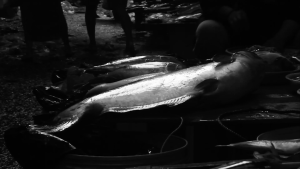
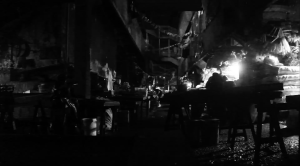
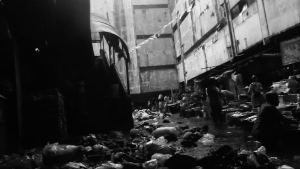
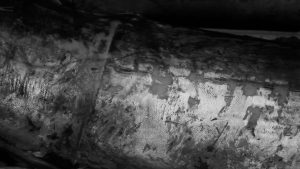
Shots from Fishguts (2025) by Ananda Firman.
Arkipel’s film programme “A Repository of Collective Memory: Local’s Embodied Memory of Flooding in Jakarta” showed impressive efforts from the collective in getting into different communities in documenting varied perspectives on the flood around Jakarta, including family histories and histories of the communities, hinting at how flooding could be a result of urban development. The way the histories were told reminds me of the films Temple of Ancestors and Hadi the Hero, and also One Hundred Years of Solitude, in which personal and family stories are told over and over; these stories are eventually turned into histories of a community and subsequently histories of a place, traversing different generations and times. However, many of these personal narratives become submerged in the grand narratives of social-political development and need to find their own ways to be circulated. Hafiz Rancajale’s film Bachtiar (2025) dissects memories related to the Indonesian director Bachtiar Siagian, whose personal history is so often buried amid the grand narratives of national history and political development. Perhaps film is a way to navigate these perspectives and create dialogues around them, allowing one to form a more dynamic and fluid sense of the world, from different places, times, and personal histories.
Homelands and Realms
I found myself reflecting on my own sense of home. My grandfather once dreamed of his village being completely demolished. He spoke of the province of his memory—crops, darkness, times when the villagers had to eat field mice. My grandmother told stories that I barely understood, the characters of these tales now faint in my memory. I have never been to my mother’s province in the Philippines; I only know the relocation site near the city. I cannot speak Tagalog well, and Tagalog is not my mother’s dialect. Cantonese became my first language, my so-called mother tongue. My grandparents and my mother have spent most of their lives in Hong Kong. My grandparents’ and my parents’ provinces could not be a “home” or a “province” for me; these places live in their memories. Even though I would imagine them as they were described to me in stories, they would always be far away from my own lived experience. Looking at the familiar routes and buildings in Hong Kong where I have lived for so long—amid all the constructions and demolitions in the city—I have often asked myself whether these places can be called a “province” or a “homeland” for me as everything is constantly changing. Or could there be a “鄉” — a “province” or “homeland” — for me at all? Where would this “homeland” be? While “鄉” can also signify an unreal, imagined realm—is the idea of “homeland” turning into a “realm” one longs for?
How might we talk about “homeland”? This question surfaces in the presentation of local perspectives to the world: How are they perceived, and how are they expected to be perceived? Through their works, internationally known Indonesian artists provide accessible entry points for foreign audiences, but they may also reinforce expectations shaped by global cultural consumption. As film and video absorb influences from the industry, contemporary art, and pop culture, how do we form our own visual languages? How do we resist dominant standards and learn to read the subtleties and fluidity of other cultural expressions—those that require patience, immersion, uncertainty, and perhaps a willingness to linger?
Some knowledge does not declare itself. It grows quietly, like wind shaping soil—an unspeakable essence at the heart of the vernacular.
[1] Asikin Hasan is an Indonesian curator, born in Jambi and studied at the Faculty of Fine Arts and Design, ITB (Institut Teknologi Bandung).
[2] Asikin Hasan, Krishna Murti’s Compass Point, in Art after Drama (2013).
[3] Jeong-ok Jeon, Art after Drama: Krisna Murti (2013).
[4] MILISIFILEM, a Forum Lenteng platform, explores visual production through workshops that use participatory and collaborative approaches to engage with contemporary social and cultural issues.
Editor’s Note:
Videotage participated in the 2025 ARKIPEL—Jakarta International Documentary and Experimental Film Festival with a special screening programme; artist‑researcher Wong Winsome Dumalagan took part in the event. During a two‑week stay, she conducted focused research into Indonesian video art and screen culture, attending screenings and talks, visiting local archives, and meeting local artists. This article presents her observations and reflections from that research trip, tracing encounters, emergent themes, and cultural contexts that shaped her findings.
(The views and opinions expressed in this article published are those of the author/s. They do not necessarily represent the views of VMAC.)
Staff Pick
The VMAC Kiosk has officially launched!
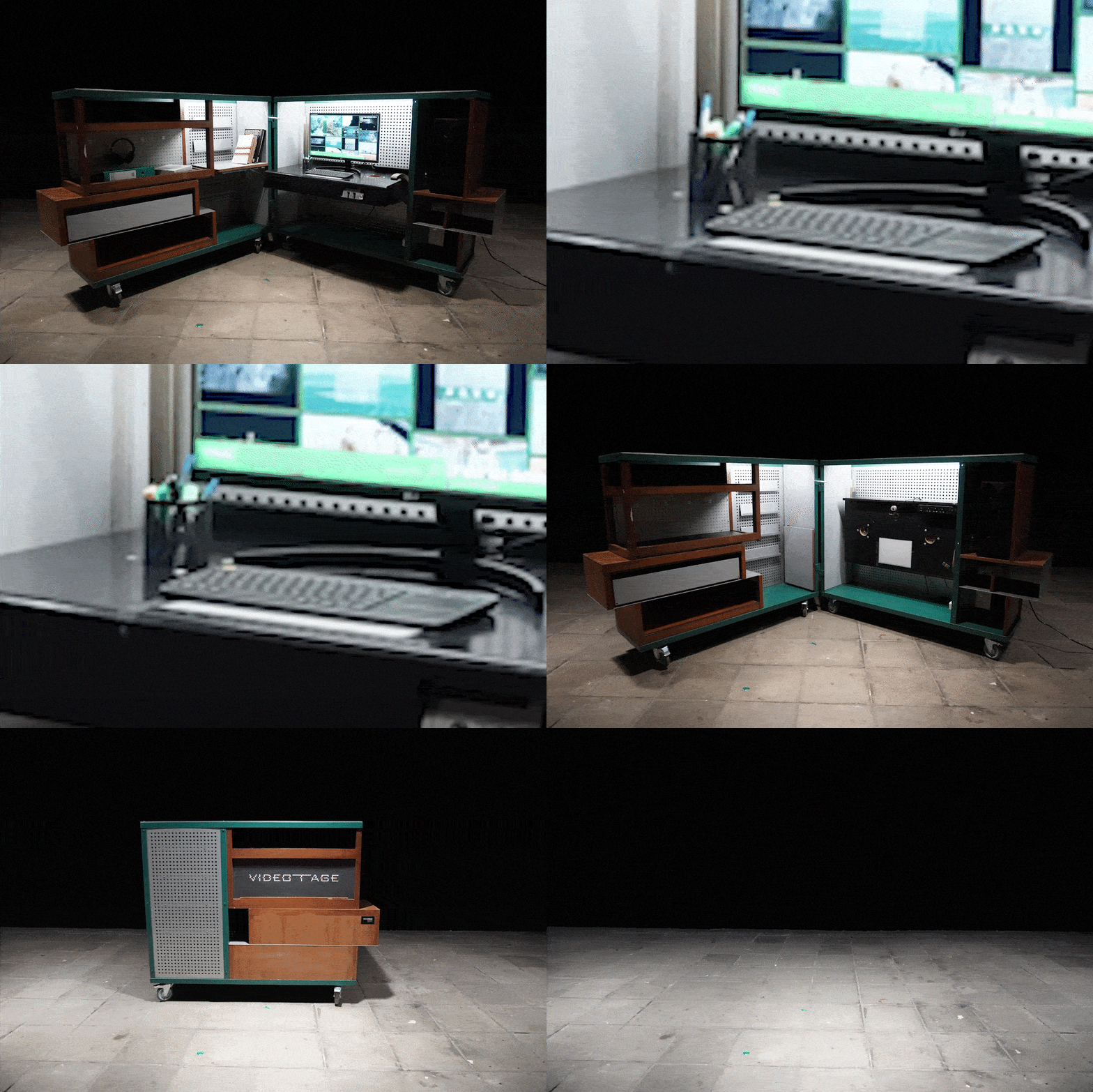
Last month, we organised the launch ceremony for the Videotage Media Art Collection (VMAC) Kiosk, debuting our mobile archive viewing space. With the support of Design Trust Seed Grant, we invited Zou-mat as the design collaborator to upcycle our old furniture accumulated over the years.
Aside from the newly added aluminium supports, the kiosk’s appearance also comes from our wooden cupboards, traces of which have been preserved. It was even designed to resemble a ‘split image’ as an homage to our logo.
The kiosk can be installed, dismantled, or folded into two halves to suit different needs. Specifically, the film editing table that has been kept in our exhibition space for years has been modified to create a computer desk, offering a private viewing booth for visitors. The other half is designed for storage. In addition to storing publications and headphones, visitors can also lay box files completely flat, making it easier to browse our old publications and news clippings.
In the future, when the kiosk is fully open, it can be placed outdoors for public use. Its aluminium pegboard can even be used as a blank canvas for artists, turning the kiosk into a mini showroom for their works. The kiosk’s transportable design also allows us to showcase video works in spaces far beyond Cattle Depot, which is especially useful as we have temporarily lost our existing exhibition space.
The VMAC Kiosk will continue to promote our archive during our ‘nomadic’ phase – keep an eye on us to find out where it will go next!
Video Review
The Narrow Road to the Deep Sea, Part V: The Remains of the Night by Lee Kai Chung, 2020
Selected and reviewed by Stanley Ng
The Narrow Road to the Deep Sea, Part V: The Remains of the Night | 通向深海的狹道,第五章:長夜將盡
VMAC recently collected local artist Lee Kai Chung’s research series, The Narrow Road to the Deep Sea. Through archival research, field study and interviews, Lee’s videos offer creative responses to the brutality that took place in Nanshitou, Guangzhou during the Japanese Occupation.
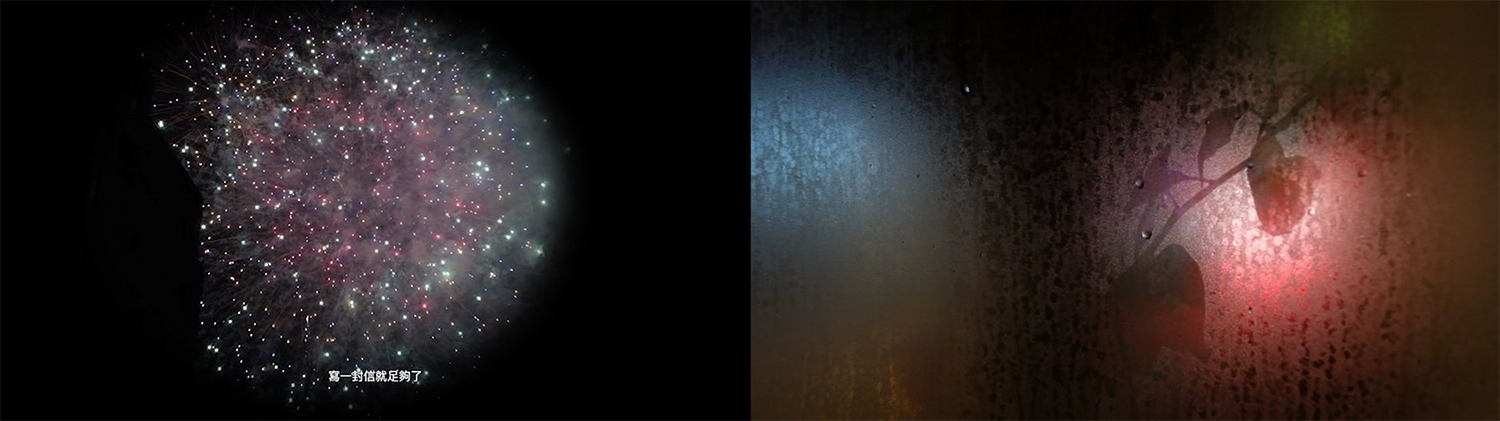
As the final part of the series, The Remains of the Night is based on Lee’s interview with a survivor of human experimentation at the time, and tells the story of a couple who were detained in the Nanshitou Refugee Camp in Guangzhou and subjected to experiments. Despite enduring immense physical pain, the two supported each other until the end. Narrative-wise, the work differs from the previous installments in the series – such as the interspersing of historical footage in George and the Swimming Pool, or the documentation of a re-enactment performance in The Digger – by following the points of view of the two protagonists, and ending with a sense of hope and romance.
The artist offers an interpretation of the form of ‘video’: video is the image in motion. The structure of the video is thought-provoking: a single photograph is zoomed in and out, then two, then more, and finally back to a single image. It’s like the breathing, in and out, of one person, then two, then many, and finally ‘we’ as a whole. We wish to feel comfortably detached from our surroundings, but often find ourselves involved. Just as the corners of the frame become darker as the images are superimposed, we become more attached to the scene as our breathing involuntarily moves in the rhythm of the video.
A two-channel video, The Remains of the Night shows the couple’s respective narrations and the scenes they see side by side. This invites the viewer to imagine other ‘antagonistic’ relationships between the two. For instance, the video starts with ‘her’ stating that she could only pick up leftovers from the refugees to feed herself, which feels more like an anthropomorphisation of the ants as the camera points to the soil. Later, the two begin to ‘interact’, which feels more like a dialogue between a nurse and a detainee.
The sense of suffering and togetherness is the strongest at the end, when both are taken to the laboratory and bid farewell under the same fireworks.
Coinciding with the 80th year since the end of the Second Sino-Japanese War, The Narrow Road to the Deep Sea series offers a perspective that goes beyond the usual narrative of ‘national humiliation’, delving instead into the individual experiences and emotions of that time. Reservations to view are welcome.
About VMAC Newsletter
VMAC, Videotage’s collection of video and media arts, is a witness to the development of video and media culture in Hong Kong over the past 35 years. Featuring artists from varied backgrounds, VMAC covers diverse genres including shorts, video essays, experimental films and animations. VMAC Newsletter, published on a bi-monthly basis, provides an up-to-date conversation on media arts and their preservation while highlighting the collection and its contextual materials.