

May 2025
VMAC Article
The Culture of the Masses: Tracing the History of Video Art in Indonesia (1990s-2020s)
Text: Valencia Winata
What should be written on the 30-year practices of making and reading video art in Indonesia? This piece observes the history of video art practices in Indonesia from the 1990s to the 2020s. I approach this observation as a research activity, as I am still learning about this particular art. My learning method consists of sensing video art through works that I found on the Internet and through a video call with Hafiz Rancajale, an artist and curator who makes and reads video and media art. My version of Indonesian video art history is based on my distant yet truthful direct experience with the said art. I touch what still remains within my reach, primarily digital artefacts, and these accessible remnants serve as the foundation for this research.
In writing about this history, I need to trace the beginnings of video art culture in Indonesia. According to Rancajale, the early video art culture did not initially derive from artistic practices (H. Rancajale, personal communication, December 26, 2024). Instead, the awareness of experiencing video stemmed from the consumption of pop culture through media in the 1990s, particularly by the young people who would drive the early video art scene in the 2000s. Rancajale added that this phenomenon set the initial video art culture in Indonesia apart from that of the West (H. Rancajale, personal communication, December 26, 2024). The latter emerged as an expansion of art form and movement, while the former was born out of a cultural phenomenon among young people commonly referred to as the MTV Generation. Alternative music and experimental music videos seen on the television channel MTV, a rock-and-roll magazine with grunge typography like Ray Gun, and fashion trends such as flannel shirts, baggy clothes, and ripped jeans were seen and sought after as unique and cool.
This pop culture consumption and influence served as the basis for many of the video works from the early 2000s. Mimicking the styles of MTV music videos, some early video works are short in duration and experiment with editing techniques. Bercerobong (Eko Nugroho, 2002) is a simple hand-drawn animation featuring rapid visuals and word play. [1] Meanwhile, Happiness is Milk (Aditya Satria, 2001) is an audio-visual work that experiments with distortion and incorporates icons of food consumerism. [2] Using pop culture language and mixing it with the do-it-yourself spirit of crafting, both works are examples of early works that emphasise experimentation with form.
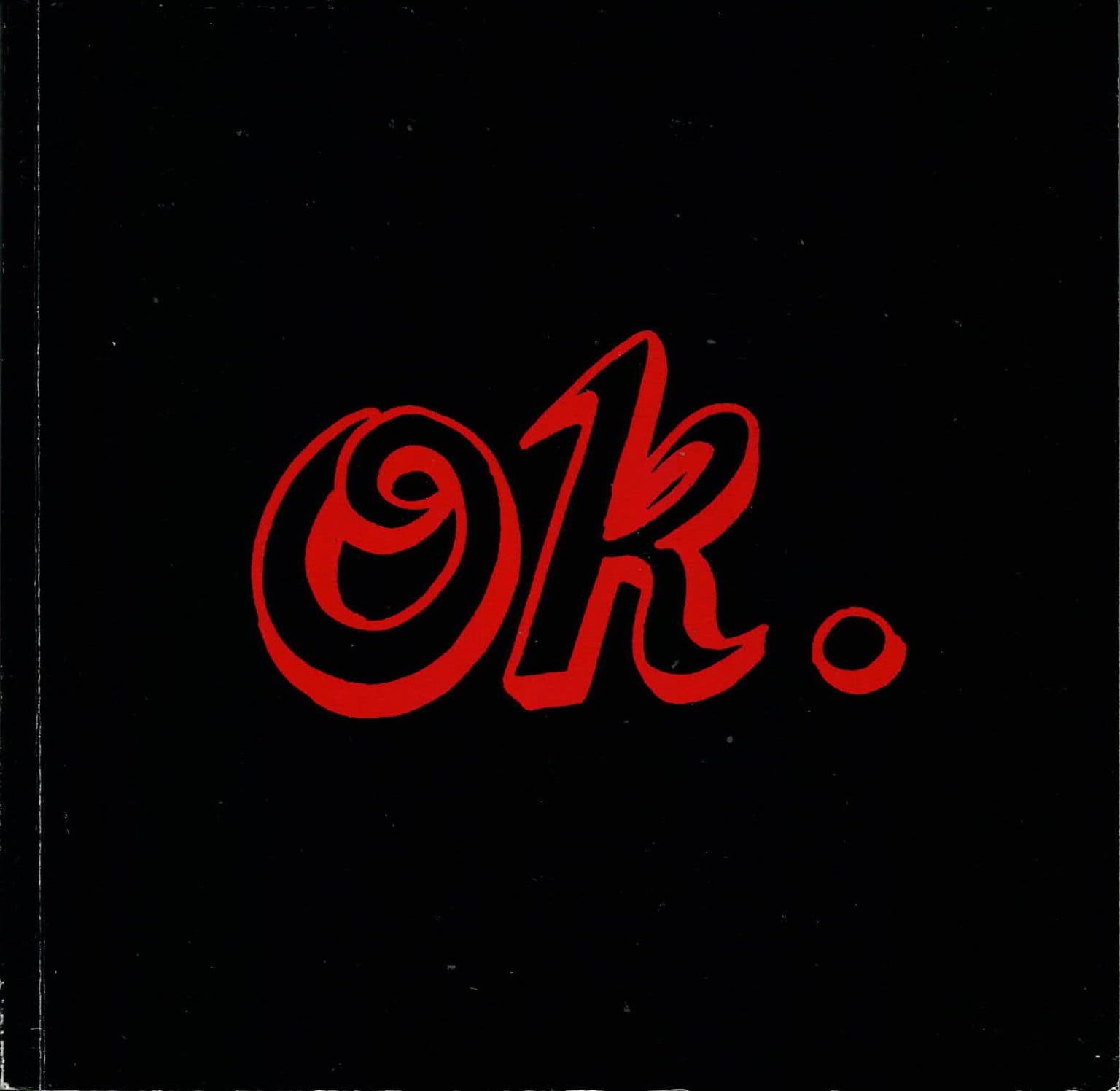
Besides the works, the development of video art cannot be separated from the processes of reading, framing and cultivating these works as art. Art institutions, such as collectives, were instrumental in mapping the early video works. In 2003, ruangrupa, an art collective, created the OK. Video festival to exhibit the burgeoning video works. [3] As one of the initiators of the festival, Rancajale noted that early video works, rooted in pop phenomenon and formal experimentation, were justified as art because they presented a pattern of certain aesthetics at the time, bringing freshness and embodying an experimental spirit (H. Rancajale, personal communication, December 26, 2024). Apart from holding exhibitions, the OK. Video festival also published catalogues featuring essays discussing the works and reading them as part of the developing artistic practices.[4] This early reading helped establish the works and shaped the direction of the initial video art discourse in Indonesia.
As video art discourse developed, there was a shift from exploring the formal elements of video to articulating the sites and situations in which video practices were based. In examining the practices, Rancajale found an increasing intention among video practitioners to approach video-making as art-making. To read the making of video as art, Rancajale formulated a model in which video practice is grounded in three disciplines: film, media, and contemporary art (H. Rancajale, personal communication, December 26, 2024). Firstly, filmic language serves as the starting point for video art to construct and deconstruct itself. Secondly, media practice serves as the mechanism and channel through which video art articulates its message. Using the logic of media practice, video art integrates itself into a mass media environment where audiences can freely perceive and consume (or choose not to consume) the works. Lastly, contemporary art methodology, characterised by its context-based research activity, plays an essential role in shaping video art culture. Over time, video practice, initially focused on form, began to self-organise as an artistic practice that questions and frames surrounding phenomena using the logic of media practice and filmic language.
Several works that exemplify this early contemporary practice are Violence Against Fruits (Tintin Wulia, 2000), Once Upon a Time in Indramayu (Wimo Ambala Bayang, 2006), and Antara Ps. Minggu – Depok (akumassa, 2009). Violence Against Fruits is a short video that pairs the sound of two people discussing why dogs should and should not be eaten with the visuals of a persimmon being cut. [5] Addressing the May 1998 riots in Indonesia that targeted Chinese Indonesians, the video cuts open stereotypes associated with Chineseness. It is an intimate work, notably for its use of everyday objects as metaphors for societal issues. Once Upon a Time in Indramayu is a witty commentary on killing mosquitoes, a daily activity in this tropical region. [6] It follows the artist chasing mosquitoes away with an electric mosquito bat. He swats at the air with the bat as if he is sword fighting while running across Indramayu–from entering people’s houses, to standing on top of a pile of rocks, to running past a petrol station and stopping at a bus stop. The video turns the act of killing mosquitoes into something unusual and comedic, prompting viewers to question what is and is not considered natural in an ordinary activity.
Antara Ps. Minggu – Depok is a work by akumassa, a media study collective, that documents the journey of a passenger taking an angkot (a minivan serving as public transportation). [7] The passenger intermittently asks the driver next to him about his routine while the camera observes the surrounding traffic. At times, the camera drifts freely, capturing other passengers getting on and off the cramped angkot. Its documentary approach simply observes and frames everyday urban living as it is. These three works demonstrate how thinking and articulation in video practices have evolved in distinct ways. Yet, there is a clear pattern across them: each responds to an everyday phenomenon and turns it into something that can be framed. This reflects a contemporary practice found in Indonesian video art in the 2000s.
These three works can still be accessed as digital artefacts on the Internet. As this research is conducted virtually, my interaction with video art depends on what I can find online and what is openly accessible. Therefore, my version of video art and its history is limited to what is alive and saved on the Internet, including all the works described here. Many catalogues–those made available online–are extremely useful but can only serve as references for tracking down the works. They cannot tell what the works are or how they look. This means that physical works, those exhibited in the form of installations, are not extensively discussed here. Additionally, my discussion with Rancajale was conducted online, which reflects the way the knowledge on video art is produced and distributed nowadays. My point is to show that the experience and knowledge-building of video art history, at least for me in this digital age, is heavily shaped by engagement with screen culture.
Moving forward, the Indonesian video art discourse has been marked by the increasing saturation of video works with other art forms in contemporary art circuits. The OK. Video festival, which used to be held biannually, has become less active in reading and exhibiting video art. [8] Since 2015, it has changed its name to the OK. Video Indonesia Media Arts festival. Another festival, called Pekan Seni Media, first organised in 2015, also conjoins video art and media art. [9] It attempts to place and read the video art discourse within a broader artistic and cultural context. Moreover, Indonesian Contemporary Art and Design (ICAD), first held in 2009, also incorporates video art installations in its annual exhibitions. [10] These changes show that the video art discourse no longer stands alone and has been diffused with other art forms within contemporary art practice in Indonesia. The number of works has increased, but the reading practice appears to have lost its consistency. Judging by the fewer and less critical catalogues produced by these exhibitions, the decreasing intensity of reading video works is alarming, which causes a gap in the discourse.
Regarding the works created in the span of the 2010s-2020s, there has been growing attention among artists to work with screen culture and media. Many works are still materialised as installations, but there are also a number of artists developing their works using digital social platforms. Fluxcup, a fictional character created by Yusuf Ismail, is a well-known persona due to his video memes on YouTube. Rapat Tersesat (Fluxcup, 2013), his most famous work, uses footage from Pengkhianatan G30S (Treachery of G30S), an iconic film used by the New Order regime as anti-communist propaganda. [11] The artist dubbed the meeting scene of the communist party members with nonsensical noises and dialogues, which completely altered the original meaning of the scene. It satirises the film and its usage, turning it into a new popular culture in the form of an Internet meme. Meanwhile, Kelas Pagi, a photography learning community, created an online photography competition in 2017. [12] They gathered photos and videos submitted by participants on Instagram and Facebook, who uploaded their works and used agreed hashtags. The selected works, consisting of 44 photos and 21 videos, were exhibited in the 2017 Pekan Seni Media. [13] This demonstrates a focus on the perspectives of the masses through technology that they closely engage with.
ngomendotcom (2023-present) is an account on TikTok that creates video content commenting on artworks and artists deemed as important influences on world aesthetics. [14] Consisting of historical and political commentary on the chosen topic, each video is also accompanied by a list of sources of information towards its end. In 2023, ngomendotcom organised Festival Videotinggi and encouraged netizens to submit video works to its account. I had the chance to see the entries that it uploaded, which cannot currently be seen. The entries served as a representation of current screen trends and practices; some responded to various everyday happenings while some highlighted and experimented with the vertical format of smartphones. ngomendotcom is a project that is aware of media uses and turns a social platform into a critical space that involves public participation. Through their online actions and interactions, these highlighted artists and projects demonstrate activities that are influenced by Internet culture. Their virtual works could be seen as a continuation of the video art and media art traditions in Indonesia that engage with everydayness and spectatorship.
In summary, the Indonesian video art discourse from the 1990s to the 2020s, encompassing both production and reading, has experienced several transitions. Beginning in the 1990s, it was influenced by pop culture, with the young generation creating fun videos that experimented with the form. By the end of the 2000s, the works gradually became more serious and incorporated film, media and contemporary art practices. Some works turned everydayness into something political, and this pattern continued in the following years. The 2010s and 2020s saw a growing interest among artists and collectives to work with digital social platforms and engage with the public. Looking at the works, the spirit of video art in Indonesia has been marked by fluidity and adaptability to cultural and technological phenomena. Meanwhile, the video art readings by art festivals have also shaped the way video art is perceived and cultivated. Apart from production, reading is (urgently) needed to build a consistent and critical discourse of video art in Indonesia.
Endnotes
[1] Nugroho, Eko. (2002). Bercerobong [Video]. Indonesian Film Center. https://www.indonesianfilmcenter.com/filminfo/video/9974/Bercerobong-tanpa-dialog/index.html
[2] Satria, Aditya. (2001). Happiness is Milk [Video]. YouTube. https://www.youtube.com/watch?v=3M3_pq8Wl-Q
[3] Gudskul. (undated). OK. Video. https://gudskul.art/ok-video/
[4] ruangrupa. (2003). Katalog Post-event “OK. Video 2003.” https://archive.ivaa-online.org/khazanahs/detail/3070
[5] Wulia, Tintin. (2000). Violence Against Fruits [Video]. Indonesian Film Center. https://www.indonesianfilmcenter.com/filminfo/video/7457/Violence-Againts-Fruits-Subtitel-Bahasa-Inggris/trailer
[6] Bayang, Wimo A. (2006). Once Upon in Indramayu [Video]. YouTube. https://www.youtube.com/watch?v=YwFOmErr53k
[7] akumassa. (2009). Antara Ps. Minggu – Depok [Video]. YouTube. https://www.youtube.com/watch?v=tOssBsOJ1bI
[8] ruangrupa. (undated). OK. Video Publications. https://issuu.com/okvideo
[9] Kementerian Pendidikan dan Kebudayaan. (2023). Kemendikbudristek Gelar Festival Komunitas Seni Media 2023. https://www.kemdikbud.go.id/main/blog/2023/09/kemendikbudristek-gelar-festival-komunitas-seni-media-2023
[10] Indonesian Contemporary Art and Design. (undated). About – ICAD. https://www.arturaicad.com/about
[11] Fluxcup. (2013). Rapat Tersesat [Video]. YouTube. https://www.youtube.com/watch?v=-10UtU2VJFk
[12] Kelas Pagi (2017). Ragam Negeriku. Instagram. https://www.instagram.com/p/BWnPhTFAZkx/
[13] Forum Lenteng (2017). Pekan Seni Media 2017. https://issuu.com/forumlenteng/docs/fa_buku-pekansenimedia-2017
[14] ngomendotcom (2023). TikTok. https://www.tiktok.com/@ngomendotcom
(The views and opinions expressed in this article published are those of the author/s. They do not necessarily represent the views of VMAC.)
Staff Review
The keywords of ‘experimental’ creation: Thoughts after reading Albert Yu’s Elemental Dynamite interview
Elemental Dynamite, a research project carried out by artist collective Floating Projects between 2018 and 2021, published an interview with animation artist Albert Yu in the form of an independent zine last year. An intriguing point raised in the interview is the difference between ‘independent’ and ‘experimental’ production that Yu observed throughout his career as an animator for major Hollywood studios. In fact, if we look at Yu’s fascination with computer art, and his professional and teaching careers, we can associate ‘experimental’ production with a few keywords.
Being ‘experimental’ is intuitive. For Yu, his fascination with computer animation is intuitive and natural. Although his interest in drawing was somewhat influenced by his family, his childhood hobby of sketching mechanical interiors and his preoccupation with computer graphics were shaped by his own experiences. During both phases, there was a transition from an intuitive passion to reality: for example, his love of BMX cycling allowed him to understand physics theories with his body, and his study of computer engineering was the result of him turning his curiosity about early computer graphics into a search for its principles and ‘realistic’ results. Later, when he wished to change society with humanity and not only with technology, he switched to electronic art. Drawing on his love of avant-garde film and music, he found art to be a useful tool for changing his perspective: unlike industrial design, creating art does not require a set of functions or ‘meanings’; rather, a distinct set of language can be developed. So far, Yu’s path to becoming an artist has been full of experimentation, and although there have been some compromises along the way, creating is still the dominant intuitive force in his life.
“I wanted to know what happened behind this ‘magic’, and why something so realistic could appear on the screen.”
However, as a lecturer at the City University of Hong Kong, Yu discovered that lectures did not necessarily inspire the same intuitive feeling in students. On the one hand, as students’ study time is limited, class time is too precious and short for him to teach the traditional principles of animation or the “mind-opening” approach to learning in a comprehensive manner. On the other hand, he expects students to feel their body movements through class exercises, in order to understand the composition of different movements in animation. Yet, the students expected the opposite, preferring to learn practical skills, rather than thinking that takes time to accumulate. For the students, inspiration for their work can come from other sources, and knowing how to use different software helps them to take on other commercial commissions, so they are more inclined to learn these skills. This also shows that ‘experimentation’ is seen as a bonus after they manage to cope with real life responsibilities such as the workplace, so the emphasis on observation and senses in the curriculum has become illusory.
Being ‘experimental’ is unconventional. For Yu, animation is a way to break away from traditional narrative and viewing methods, thus forming one’s own interpretation. Seeing art as an alternative way of looking at society, he was deeply inspired by alternative music and film, which he has incorporated into his animation worldview. For example, the music of the Scottish band, Cocteau Twins, has its own gibberish; Mike Figgis’ 2000 film, Timecode, inspired him to use non-linear, multi-channel imagery that allows the viewer to freely interpret the narrative; and Jane Campion’s The Piano (1993) demonstrated the power of the intersection between music and image. The rapid advancements in computer graphics is the catalyst for all these elements, as it opens up the possibility of creating a realistic virtual world, without the need for photography or traditional storytelling elements such as character, story, and text. Today, his virtual reality animation continues to allow the audience to interact with the film and determine its direction.
“For me, animation is neither about anime nor about characters, but the integration of visuals and sound.”
In the interview, Linda Lai, the founder of Floating Projects, mentions that the local animation community seems to be more “self-sufficient” and does not feel the need to connect with the wider world and history of animation. Yu agrees, adding that Japanese and Hollywood anime have become “role models” for many, making him feel out of place among other animators. He also believes that, unlike his own preference of animating patterns and objects, animation is mainly seen as a story-driven alternative form of film in Hong Kong, which limits its potential to illustrate shocking visual elements. This echoes the rhetoric in the previous paragraph, that students are less likely to experiment on their own, as they are inspired by other sources. In my opinion, the practice of looking to specific foreign examples as role models seems to be a common problem in other art industries such as design.
Being ‘experimental’ has few outlets. If local animation is limited by its own perspective, Yu’s US experience shows that even ‘independent’ productions can be constrained by the commercial environment. Although working at DreamWorks Animation was not his dream job, he gained practical experience in areas such as film production and logistics. In contrast, Blue Sky Studios, while claiming to be an ‘independent studio’ in the animation industry, is still constrained by distributors and the box office, making its work “a stepping stone to major productions”. Interestingly, he mentioned that mainstream filmmakers also want to create experimental work, and that the former’s scale is large enough to provide resources for producing atypical short films that demonstrate an “independent spirit”. Lai also mentions that during the research for Elemental Dynamite, ‘independent video’ was often equated with ‘experimental’ production, but even the artists so labeled had produced commercial works. For them, ‘experimental production’ is a form of creation that is not defined as either ‘independent’ or ‘commercial’: there is more room for discussion, but this topic is also less likely to be explored by the general public.
The interview concludes with Yu’s experience as an adjudicator for the animation category of the ifva Awards. He stresses that his role is to encourage participants to break away from the usual narrative and film language, and to challenge the definition of animation. In particular, he believes that ifva’s ‘independent spirit’ should embrace works that, because of their unorthodox approach, cannot be simply labeled as ‘animation’ or ‘film’. Yu’s interview took place in July 2019. He was then in his third year on the judging panel, and was also part of the panel for the 2024 competition – the last one before the competition went on “a brief hiatus”. In this zine’s introduction, Lai describes ifva as “an indispensable jiang hu“; in the same vein, Yu hopes that the competition could serve as an arena that brings together people with different expertise but each with their own unique skills. Local short film competitions were already few and far between, and with the demise of ifva, there is no place for budding artists to compete, even if they want to try their hand at something other than traditional storytelling.
The detailed personal interview with Albert Yu is published in Floating Projects’ zine, Floating Projects Research: Elemental Dynamite: Manuscripts #2: Stakeholders’ interviews 1, for interested readers.
Staff Pick
Musing on a work of May Fung in May
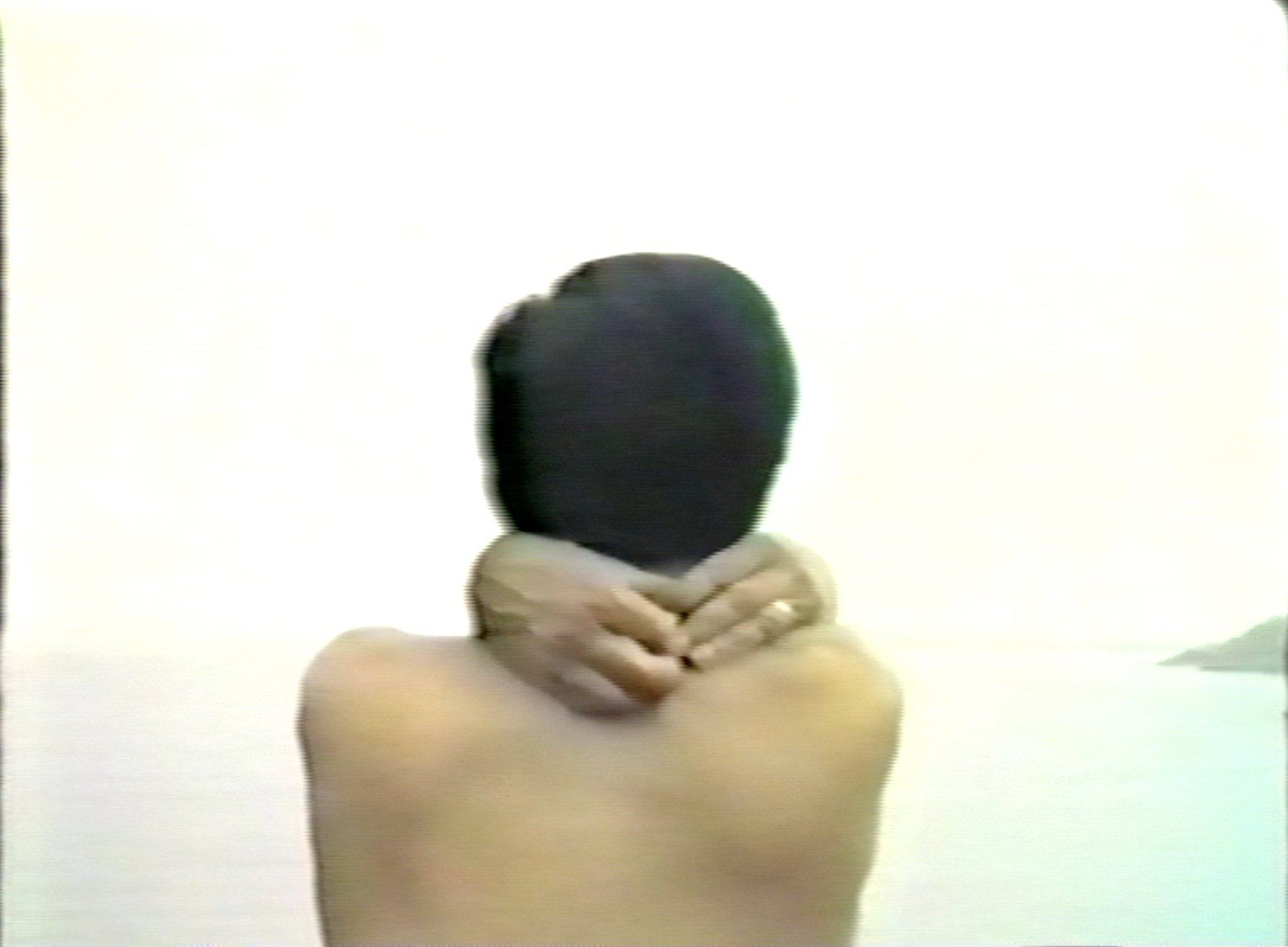
In recent times, the work of local artist May Fung has been featured at venues such as Art Central and M+. For instance, Thought IV: The Edge of the World (1989), digitally restored from a videotape on loan from Videotage, will be screened at M+’s upcoming Asian Avant-Garde Film Festival. Although Thought IV was created out of the artist’s self-reflection [1], watching our old digitized copy, especially where war news has been appropriated, evokes a sense of sadness and a string of thoughts that leads to the edge of somewhere else…
We often feel that our vision is broad enough to justify our commenting on all aspects of life. Yet, in Thought IV, as the sea waves brush against the edges of a rugged island, the boundary between the sea and the land – and, by extension, that between people and events – is not as clearly defined as it is on a map. The sea and the highway as seen through the lens are probably as far as Fung’s eyes could see, and even if we feel that they are boundless, our visions are ultimately limited, whether through the camera lens or human eyes. Of course, the internet did not yet exist at the time, and Hongkongers’ understanding of world affairs mainly came from international news. In this work, a hand holds a black-and-white photograph with indistinct features up in front of a TV screen, just as we inevitably view the world from the vantage point of our limited knowledge.
The advent of the internet may seem to have brought people closer together, but it is more like we are unconsciously exposing our limited field of vision. Even when we have something to say, we have to ruminate before coming up with a long-winded, even ambiguous, ‘model’ response, while repeatedly asking ourselves how we are contributing to the situation. Even video, a medium that emerged as a critical tool, has become so popularized that it seems to have lost its sensitivity. In Fung’s video, we see the silhouette of a person strangling his/her neck on the edge of a cliff. Don’t we also experience the same sense of speechlessness in today’s world?
In two separate scenes, the same person stands near a cliff and a TV set, slowly raising his/her arms as if practicing a dive into the water. In the former, his/her motion looks like an act of desperation; but in the latter, as he/she mimics the same action in a more comfortable environment, it looks more like preparing to jump into a pool, casually watching the ‘desperation’ constructed on the TV screen. Throughout the video, a voice appears amongst the ambient noises a few times, giving out some random directions. Perhaps we are blindly chasing the unknown voice and following the status quo? Or are we taking a plunge, desperate to escape from the fait accompli?
Thought IV: The Edge of the World, alongside the early experimental films by veteran film critics Sek Kei and Law Kar, will be presented during the Asian Avant-Garde Film Festival at M+ at the end of this month. Reservations to view May Fung’s other video works through VMAC are also welcomed!
[1] Referenced from May Fung’s transcript of her talk at M+ in 2019. https://www.mplus.org.hk/en/magazine/from-1989-to-now-may-fung-on-video-art/
About VMAC Newsletter
VMAC, Videotage’s collection of video and media arts, is a witness to the development of video and media culture in Hong Kong over the past 35 years. Featuring artists from varied backgrounds, VMAC covers diverse genres including shorts, video essays, experimental films and animations. VMAC Newsletter, published on a bi-monthly basis, provides an up-to-date conversation on media arts and their preservation while highlighting the collection and its contextual materials.